Not every interactive experience should be built the same way. Some projects need the speed of a no-code workflow, others the freedom of creative coding, and others the power of real-time 3D or enterprise-grade data integration. That is exactly why we built our Scape X® object recognition to work as part of an open ecosystem, rather than a closed one.
By speaking TUIO, Scape X® seamlessly connects to the tools that teams already know and trust. It gives designers, developers and experience teams the freedom to choose the right software for the job — without compromising on flexibility, future-readiness or the quality of the interaction itself.
Instead of locking a project into one software stack, we make it possible for Scape X® to connect to the tools that best fit the team, the use case and the level of technical complexity.
To show what that looks like in practice, we’ll now look at five software environments that are especially relevant for Scape X® projects. Each one serves a different type of project scope team and hence a different way of working, but they all rely on the same foundation: reliable object recognition, responsive multitouch interaction and a workflow that fits the requirements project rather than forcing the project to fit the software.
Unity is the right fit when the experience goes beyond a visual interface and becomes a spatial environment. For immersive applications, 3D product worlds, digital twins or interactive storytelling, Unity gives developers the tools to build rich real-time experiences that feel alive.
Scape X® object recognition adds a powerful physical interaction layer to that world. Through TUIO, touch and object data from the surface can drive movement, selection, navigation and multi-user collaboration inside the Unity application.
That makes the combination especially relevant for immersive showrooms, collaborative sales tools and experience centers where visitors should not just watch content, but actively shape it.
Our internal software team has already used this approach in the E.ON EIS Mastertable project, where a custom Scape X®-powered setup helped create an interactive experience for exploring energy solutions in a collaborative way.
For 3D developers, the value is clear: they can keep working in Unity, with the workflows and rendering quality they already know, while Scape X® provides the interface that makes the interactive experience really tangible.
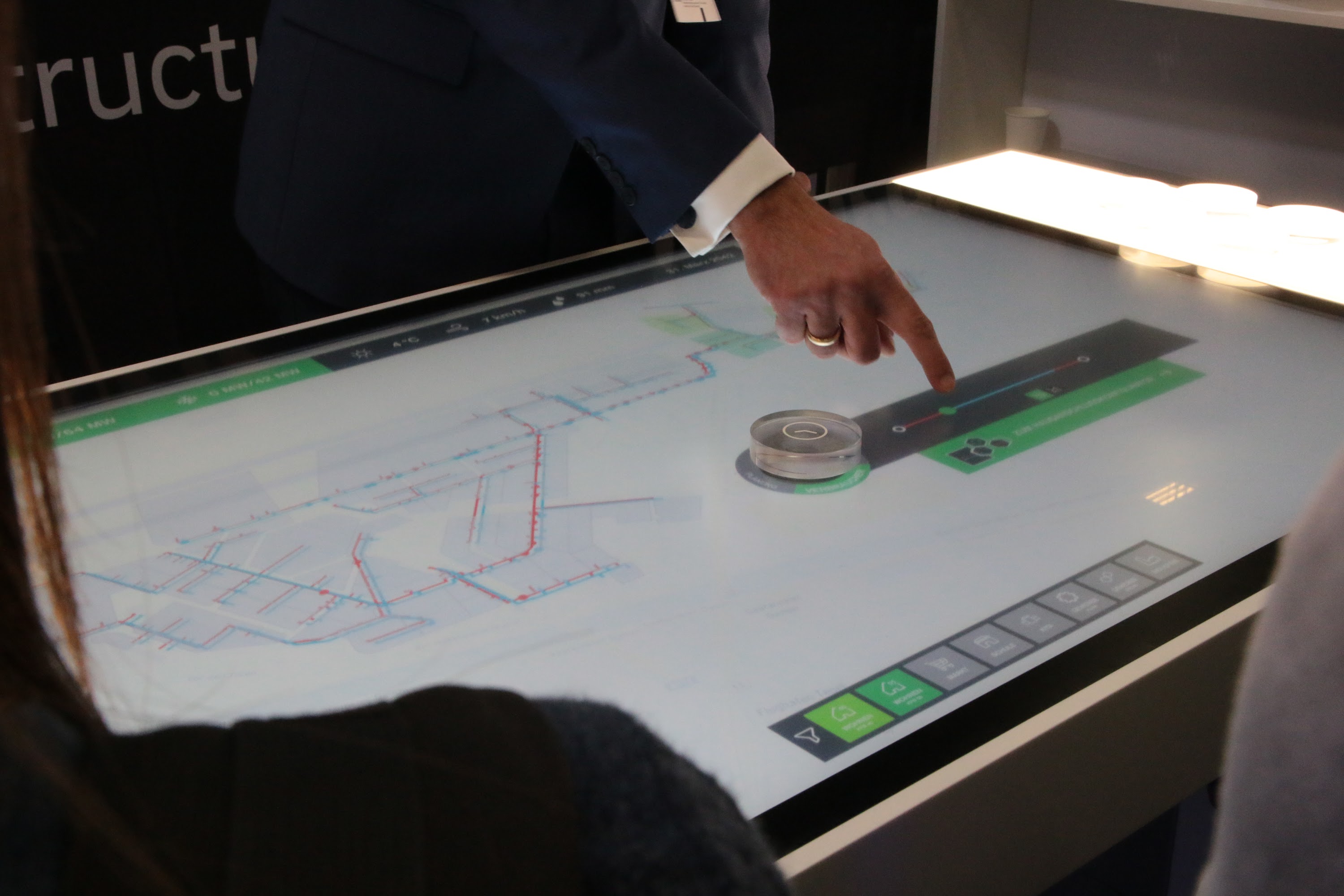
Ventuz is a strong fit for enterprise environments, broadcast-style applications and installations that rely on high-performance visuals and live data integration. It is particularly well suited for projects where stability, responsiveness and visual precision are essential.
In this context, Scape X® object recognition becomes the tactile front end of a more complex information system. Touch gestures and physical objects can be used to explore data, trigger views or control dynamic content in a way that feels intuitive and immediate.
A good example is the Broadcast Analyse Table that Ventuz demonstrated at Integrated Systems Europe 2025. We asked Ventuz to showcase what their technology could do on top of Scape X®, and the result was a standout presentation of responsiveness, visual fidelity and seamless interaction.
This kind of setup is ideal for holistic projects that need more than a generic touchscreen interface. It is for teams that want to turn data into something people can physically engage with, while still working within an enterprise-grade software environment.
Intuiface is a natural choice for teams building interactive experiences in retail, museums, showrooms and other visitor-facing environments. It is especially valuable when the project needs to be managed visually and maintained by people who are not necessarily developers.
What makes Intuiface particularly relevant for Scape X® projects is its ability to work with TUIO-based object data. That means our object recognition technology can feed directly into an Intuiface experience, allowing tangible objects, multitouch gestures and interactive content to work together in a single flow.
This is a strong fit for agencies and experience teams that want to create polished installations without reinventing their content pipeline. Instead of building everything from scratch, they can use Intuiface for the experience layer and Scape X® for the physical interaction layer.
Our partner Evelution for example works with Intuiface, which makes this combination especially relevant for projects where strong content storytelling meets reliable interactive hardware. It is a good example of how Scape X® integrates into an existing workflow instead of forcing a completely new one.
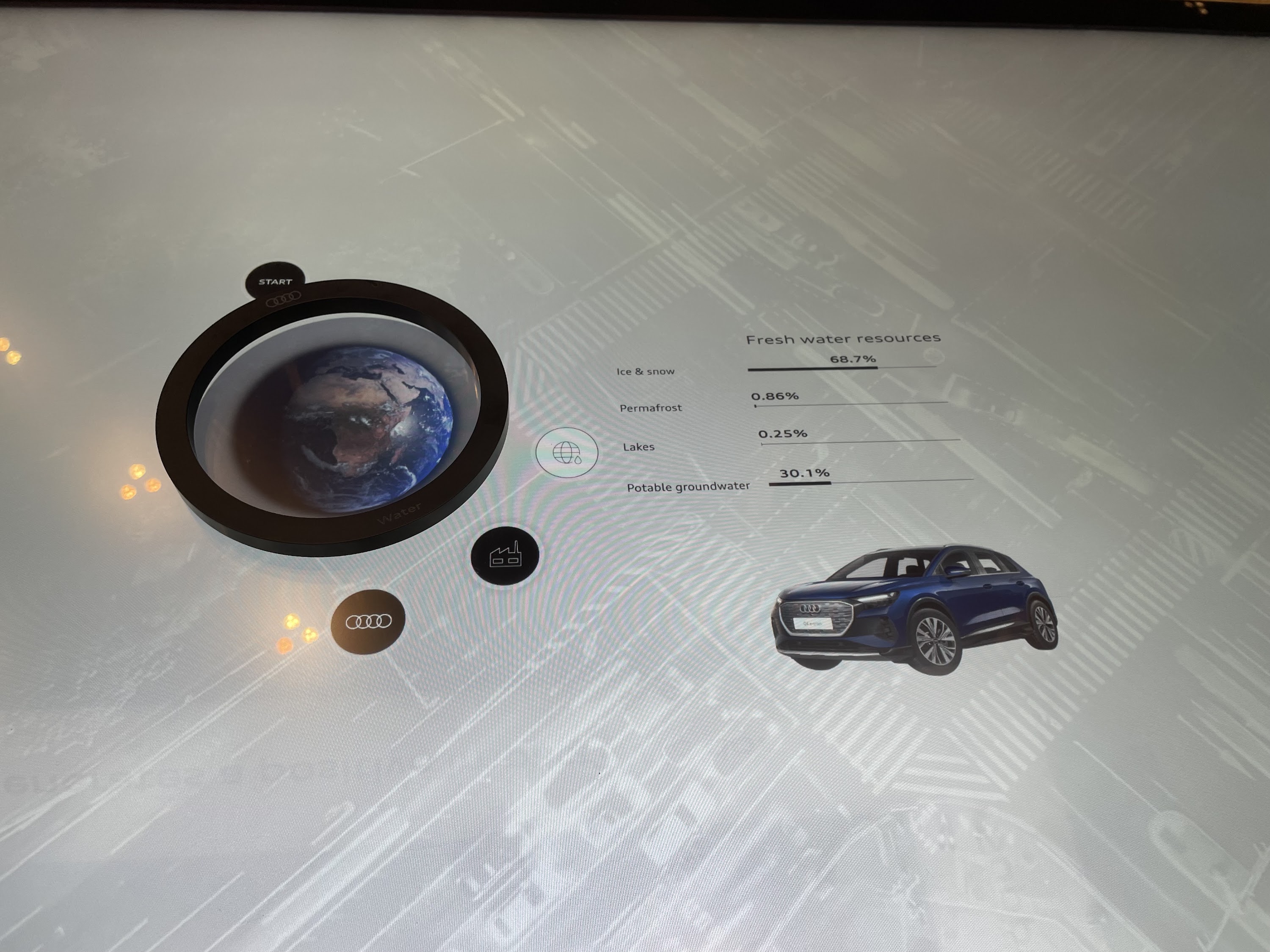
For creative technologists, TouchDesigner by Derivative is often the platform of choice when the project needs real-time control, expressive visuals and a high degree of freedom. It is built for people who like to think in systems, data streams and live interaction logic.
This is exactly where Scape X® object recognition becomes a compelling input source. With touch and object tracking feeding into TouchDesigner, creative teams can turn physical interactions into generative visuals, motion responses, sound cues or live data-driven experiences.
The strength of this combination is flexibility. Scape X® gives the installation a precise, reliable interaction foundation, while TouchDesigner gives the creative team the freedom to transform that input into something highly visual and reactive.
We saw this clearly at our Partner Summit in September 2024, when Markus Heckmann from Derivative showcased TouchDesigner’s seamless integration of touch and object tracking in a live demonstration with our technology. This was striking proof that TUIO-based interaction can be both technically mature and creatively promising.
For teams that want to build installations with a strong visual identity and a dynamic real-time feel, this is one of the most natural combinations.
For designers and content teams, PandaSuite is a strong fit because it combines no-code flexibility with creative freedom. It is not limited to multitouch installations. One project can be deployed as a kiosk, a multitouch table, a native app, a web app or a desktop app.
TUIO sits inside the same visual editor as everything else, so object recognition can be combined with touch, animation, video, audio, 3D and data without any extra friction. That makes PandaSuite a good match for teams that want to build interactive content without writing code.
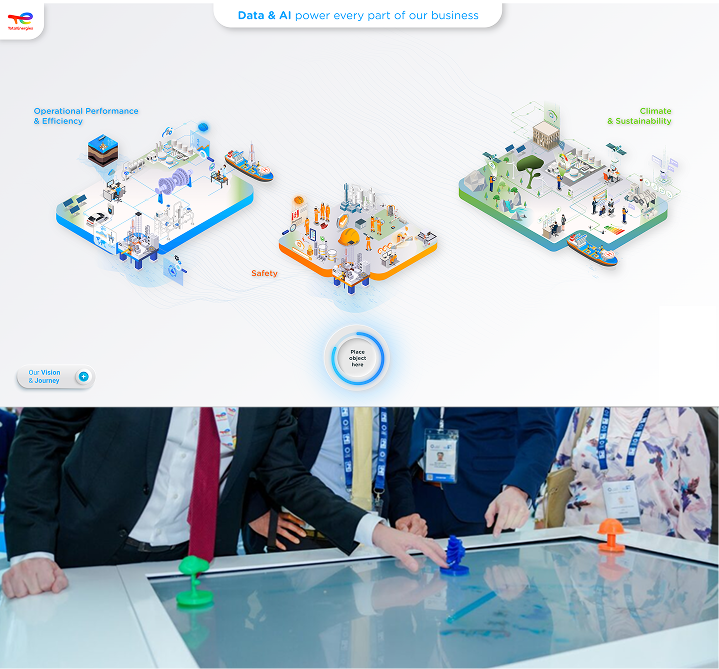
A good example is the TotalEnergies E&P Phygital Experience created for ADIPEC in Abu Dhabi, developed by Virtuoz with PandaSuite. Bespoke 3D-printed objects represented different strategic pillars, and when visitors placed one on the table, Scape X® object recognition triggered the matching chapter in PandaSuite.
The setup made complex content easier to explore and gave the presentation a more tangible feel. PandaSuite’s offline-first, hardware-agnostic setup also makes it a practical choice for museums, trade shows and retail environments.
At Interactive Scape, we believe the best interactive experiences are built on foundations that adapt to the project, not the other way around. Scape X® is designed to integrate into existing workflows, whether that means no-code platforms, creative coding environments or enterprise systems.
That flexibility is also what makes our partner network so valuable. We work with professionals across different industries and levels of expertise, which allows us to match the right technology and the right know-how to each use case.
If you are planning a new interactive installation or looking to upgrade an existing one, Scape X® gives you the freedom to build on the tools you already trust. And if you’d like to find out how this might work for your project, just book a demo with our team so that we can evaluate the best solution for your workflow together.
© 2026 interactive scape GmbH
Wilhelmine-Gemberg-Weg 6, 10179 Berlin
contact@interactive-scape.com
+49 30 69 80 94 - 100